
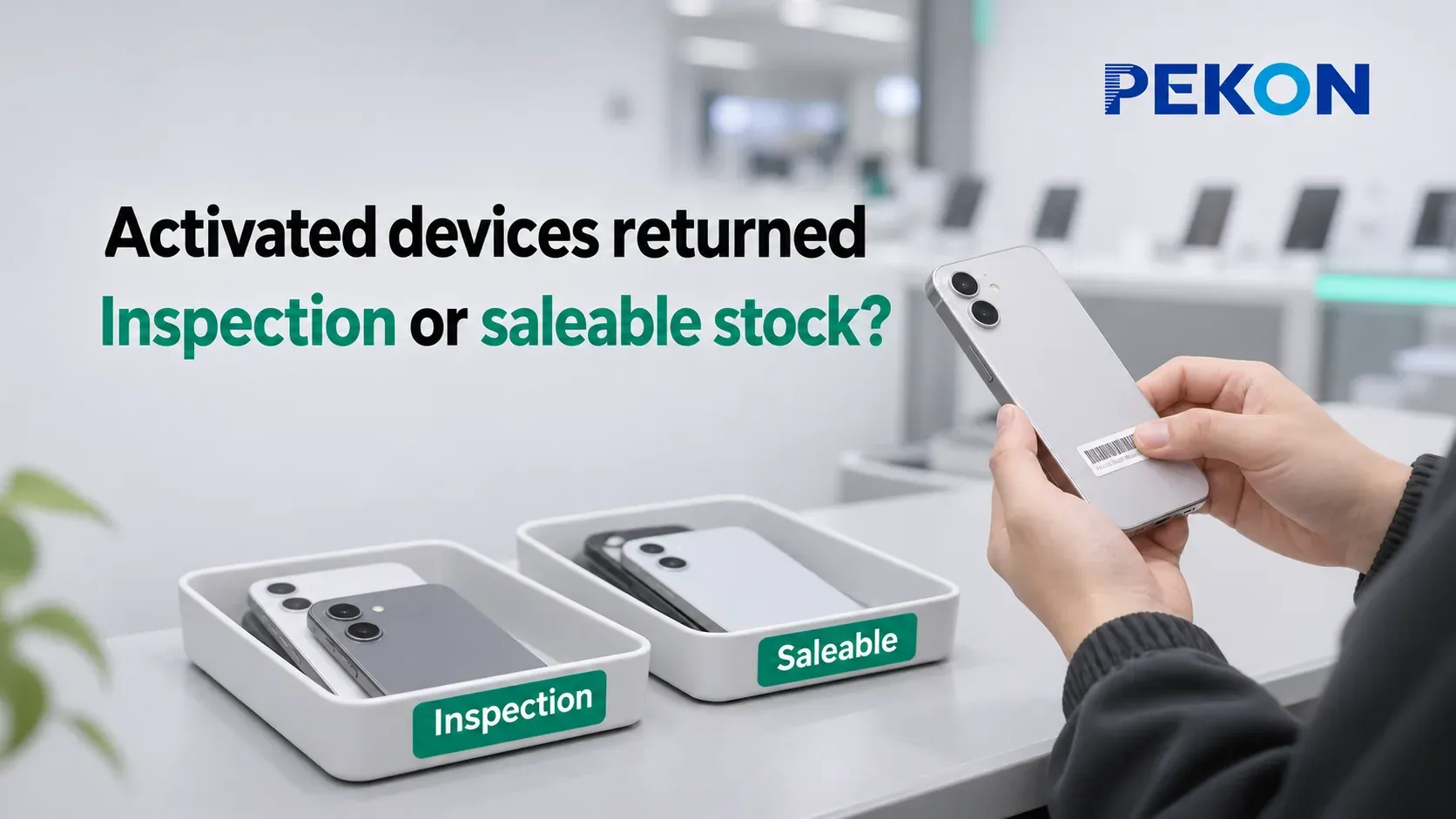
When an activated device returns to an electronics store, the inventory record needs to explain more than a one-unit increase. The store needs to identify the device, know whether it has been inspected, locate the person holding it and establish whether it can be sold again.
For retail leaders, these details support practical decisions: whether an associate can select the device for a sale, what a store manager should hand over to the next shift, and how headquarters can trace the returned item's destination.
Receipt of a returned device needs a record; release into saleable inventory needs a confirmed basis. Connecting device identity, current status and processing results keeps returns inventory aligned with subsequent sales.
A unique device identifier connects sales, activation and return history
Two devices with the same model and colour may have different histories. One may never have been sold; another may have been sold, activated and returned. SKU-level quantities alone do not capture that distinction.
A unique identifier such as a serial number provides the link between records. At receipt, staff identify the physical device and match it to the original sales line and the current return record. Subsequent colleagues can then see where it came from and how it has been handled.
Activation is part of the device's history, rather than evidence of a quality issue. Its activation and transaction history should remain available after a return, including when the device is subsequently approved for sale, so stores and headquarters can consult the record.
The central task at receipt is to match the physical item with its records. Where identity or the original transaction still needs verification, the outstanding check stays recorded for the designated role to resolve.
Inspection and pending-action stock remain outside ordinary saleable inventory
A returned device may be awaiting inspection or may already have a result but no confirmed destination. Both situations require custody and traceable records, with a clear distinction from ordinary saleable stock.
Brands can use their established business terms to identify goods awaiting inspection, goods awaiting a decision and devices approved for a defined sales use. The status should guide store operations: a device pending inspection is visible in inventory but remains unavailable for selection as an ordinary saleable unit.
The relevant restriction also applies at the points where a device is used, such as selection at checkout or allocation to an order. Associates can then identify devices available for sale while managers retain visibility of those still being processed.
If a store receives an item before the return is approved, receipt or custody is recorded under the brand's process, with the formal stock-entry point separately defined. Distinguishing physical receipt from completion of the return provides a common basis for customer enquiries and internal handovers.
Inspection and disposition results determine subsequent handling
The following illustrates a management process. Actual acceptance and handling requirements follow the brand's procedures and applicable requirements.
A customer brings an activated device to the store. Staff verify its serial number, locate the original sales record and record the item received. Once the return is approved and booked into stock, the device enters the inspection-pending category: the store can find it, while its selection for an ordinary sale remains restricted.
The after-sales inspection report links to the same serial number. If the brand still needs to approve the disposition, the device remains pending action after inspection. Once the confirmed decision is received, the next step may be repair, return to a designated location or a subsequent sales process for which it meets the conditions.
| Processing stage | Store information | Sales treatment |
|---|---|---|
| Booked into stock; awaiting inspection | Device identity, custody location and inspection task | Excluded from ordinary saleable inventory |
| Inspection complete; disposition pending | Inspection result, outstanding decision and responsible role | Relevant sales restrictions remain |
| Disposition confirmed | Next destination, approval basis and handling record | Act within the approved purpose and scope |
Two distinctions matter here. The inspection result belongs to the specific device. Permission to sell it again, and the permitted sales category, depend on a confirmed disposition; inspection completion alone does not establish that it can be sold as an ordinary new item.
Managers can use these records to hand over unfinished tasks. Associates can establish whether the device is available for the intended sale. Headquarters can follow the same unit from receipt through inspection to its next destination.
PEKON supports device traceability and returns inventory
The PEKON retail solution for consumer electronics brands uses unique device identifiers in receiving, sales, returns and stock counts, supporting enquiries about individual units and associated transactions. Store inventory distinguishes different management purposes. Repair and extended-warranty order entry links devices and transactions with the brand's specialist after-sales system.
These capabilities provide a basis for managing returned devices. Stores retain physical-item and business records, specialist after-sales teams supply processing information, and the retail side supports enquiries and subsequent operations. Inspection statuses, sales restrictions and disposition confirmation methods are implemented against the brand's processes and project configuration.
The value for an electronics brand is a clear record and destination for each returned device. Stores can see the actions currently appropriate for the unit, while headquarters can review its processing history. Preserved device history gives inventory and sales a traceable basis.
Discuss device traceability and returns inventory with PEKON, including the connection between unique identifiers, stock and after-sales information.