
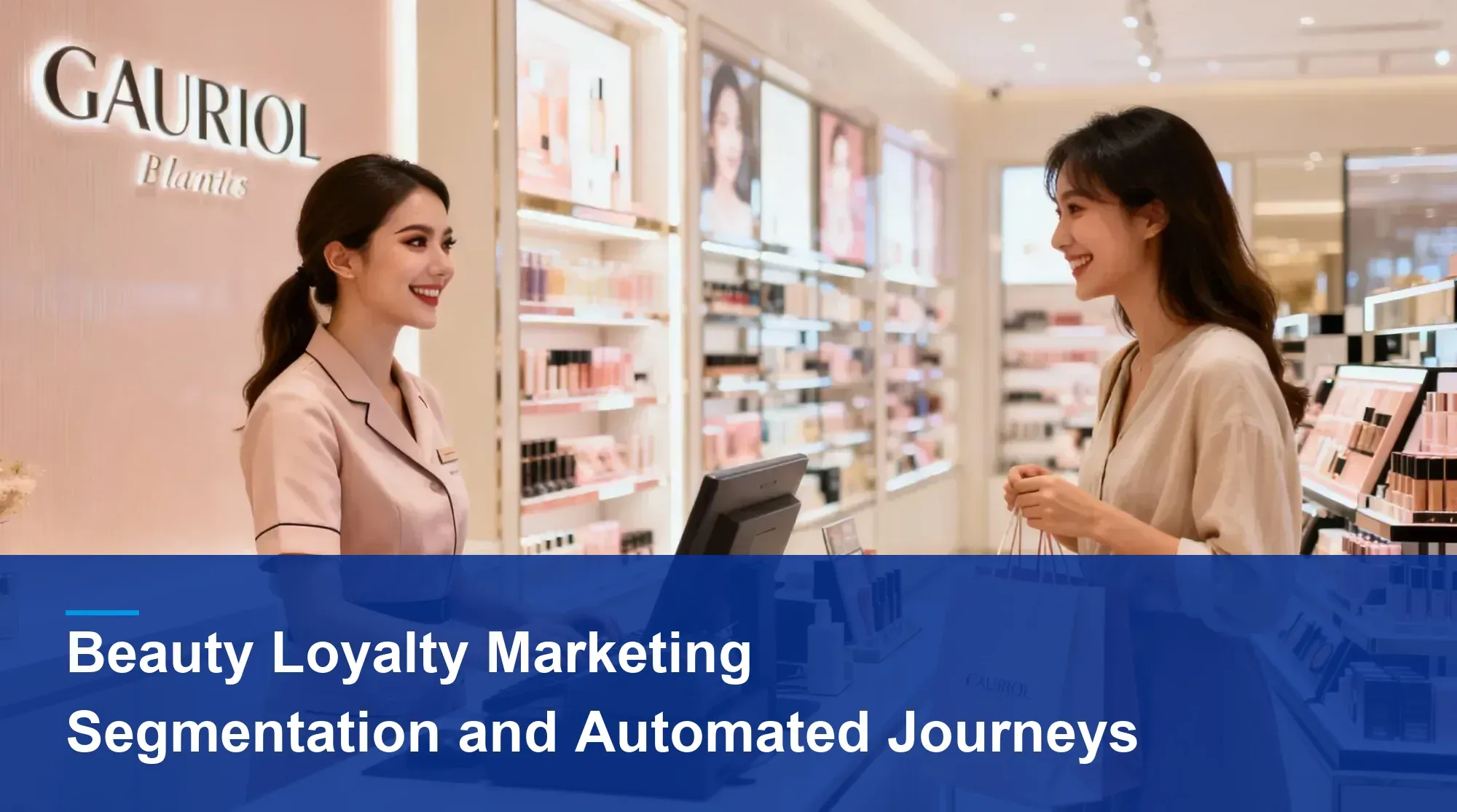
Beauty Loyalty Marketing: Segmentation, Automated Journeys and Better Timing
Repeated blanket discounts can become noise. Beauty brands can use member information to tailor communication and benefits to different needs, rather than sending every customer the same offer.
A sustainable approach combines segmentation, automated execution and measurement to support repeat purchase and longer-term customer value.
Build segments that lead to different actions
Value: recency, frequency and spending can distinguish core, potential, regular and inactive members. These groups may require different levels of service or re-engagement.
Needs: relevant skin preferences, product categories and skincare goals can guide content, such as hydration, makeup or anti-ageing interests.
Behaviour: birthdays, expiring points, abandoned baskets or participation without a later purchase can identify a useful moment for contact.
CRM brings these identities, tags, benefits and operating rules into a consistent framework. Tags are useful when they change the action taken.
Design automated journeys
Welcome new members
A sample sequence might introduce the brand and a first-order benefit on day one, recommend popular products on day three and remind the member of an unused coupon on day seven.
Re-engage inactive members
A member with no purchase for more than ninety days could receive a suitable coupon, sample invitation or new-product experience. A response returns them to an active journey; continued inactivity calls for a lower-frequency approach.
Respond to relevant events
Birthdays, points expiry, uncompleted baskets and expected purchase cycles can trigger communication. The source gives an example of a complementary moisturiser suggestion forty-five days after a serum purchase.
Connecting CRM with store retail workflows allows redemption and resulting sales to inform the next step.
Reduce indiscriminate messaging
Match content to needs. Seasonal hydration advice and long-wear makeup content serve different interests.
Match benefits to the relationship. A valuable member may prefer a dedicated service or early access rather than a large discount. An inactive member may need a different invitation.
Control timing and frequency. Avoid several campaigns contacting the same person in a short period. Preference settings and unsubscribe options give customers control over the relationship.
Measure the response
Compare opens, clicks, redemption, repeat purchase and subsequent basket value by segment, rather than only reporting the number of messages sent. Review reactivation cost against acquisition cost and whether exclusive benefits support repeat buying.
A/B tests can compare wording, benefit levels, timing and channels within an audience. Longer-term retention and lifetime value help establish whether a campaign created more than a single discounted transaction.
Make CRM an operating foundation
Segmentation identifies differences, automation makes relevant actions repeatable, and analysis improves the rules. PEKON's experience with beauty loyalty programmes emphasises knowing whom to contact, when and with what content, rather than increasing message volume.
Frequently asked questions
Where should a brand start?
Begin with clear events such as birthdays, points expiry or unused coupons. These provide a practical way to test automation before adding welcome, reactivation or replenishment journeys.
Can segmentation still become intrusive?
Yes, if the content lacks value or contact is too frequent. Keep the message relevant and give customers preference and opt-out controls.