
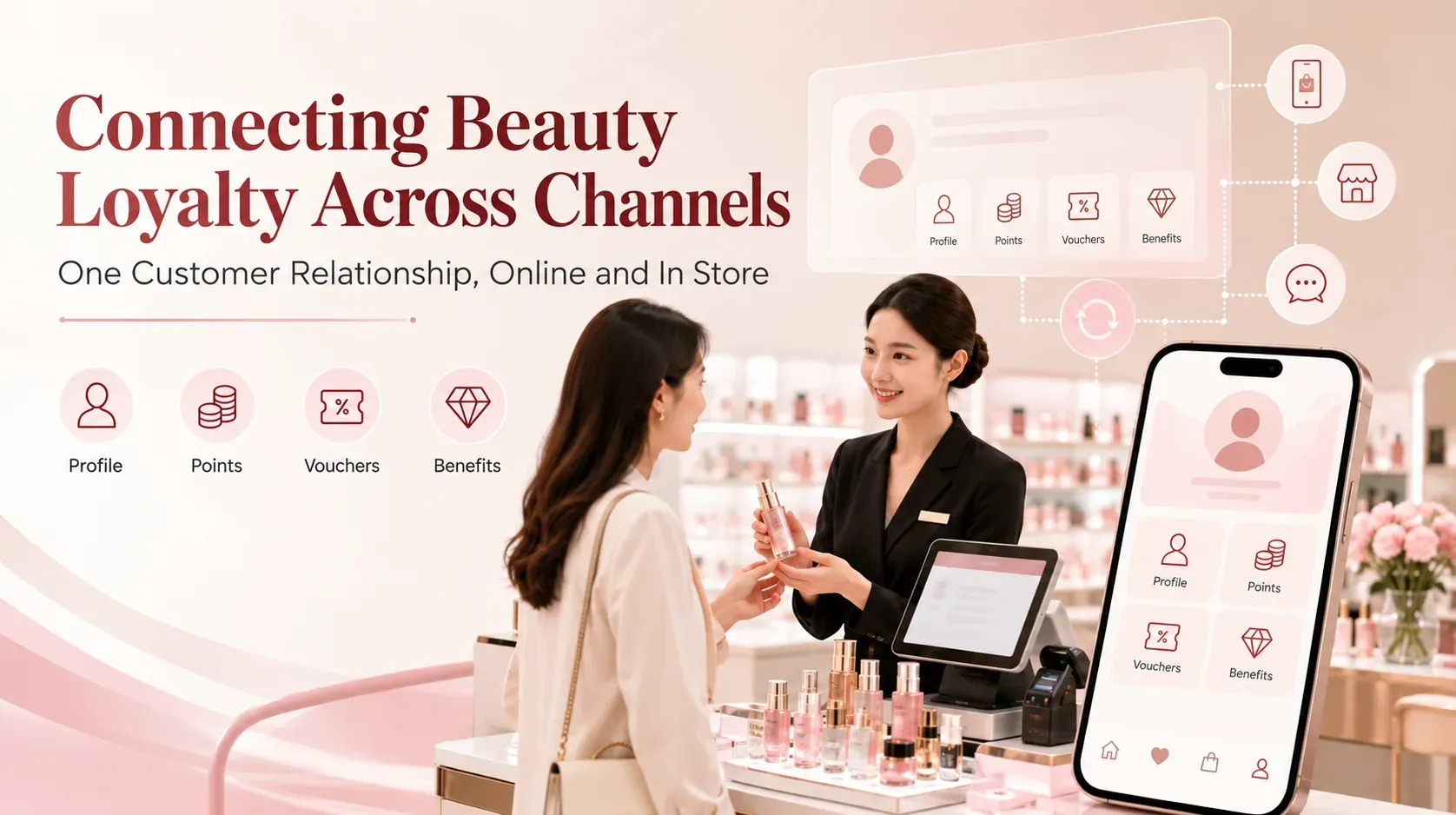
Omnichannel Loyalty for Beauty Brands: Turning Customer Data into Better Service
A beauty customer may buy on a marketplace, check points in a membership mini-program and visit a store for a gift or treatment. Connecting membership across these touchpoints should deliver consistent service, not simply consolidate records in a database.
Many brands already have POS, CRM, marketplace membership, mini-programs and associate tools. The remaining questions are how records become a brand-owned customer profile, how benefits are recognised and fulfilled, and how store service enriches that profile. Software provides the foundation; membership policies, store processes and staff management must support it.
1. The value: customer experience, brand service and sales opportunities
Customers who join online should remain recognisable in store. Points, tiers, coupons and benefits need consistent explanations and use across touchpoints.
Beauty membership extends to member days, birthday gifts, repeat-purchase rewards, samples and treatments. Inconsistent display or redemption is experienced as unreliable brand service, regardless of which system caused it.
Connected records also provide a more complete customer view. Online purchases and interactions, store consultations, mini-program benefits and associate follow-up contribute different information.
PEKON's published MAOGEPING project includes cross-platform One ID and connected points and benefits. It offers a reference, while implementation for another brand still depends on channels, platform permissions and membership rules.
2. Stores remain a major loyalty touchpoint
Sales and advice. Product trials, higher-value purchases, sets and treatments often require explanation. Store transactions add category, basket and purchase-cycle information.
Richer profiles. Associates learn about skin needs, desired benefits, product feedback and repurchase intentions. Appropriate tags and service records can add these insights to the brand's customer profile.
Benefit fulfilment. Gifts, samples, member-day offers and treatments often require in-store checks, redemption and service delivery. Results should return to the member centre.
Continuity of service. Makeup trials, skincare advice, treatments and after-sales conversations should inform later interactions, rather than remain isolated encounters.
3. Give each system a clear role
The CRM or omnichannel member centre owns the member profile, tags, points, tiers, benefits, coupons and policies. Marketplace membership connections, including Tmall Member Connect and Douyin membership integration, link platform members to the brand's own framework within authorised access.
The available scope may include registration, account binding, points, tiers, transactions and coupon redemption. Confirm it against platform interfaces, brand rules and project configuration.
POS is the in-store execution point: it identifies the member, records a transaction, applies benefits and captures relevant service activity. Associate tools extend communication, campaign sharing, assisted ordering and care beyond checkout. POS should not be treated as the owner of all omnichannel customer ingestion.
4. Make store activity reusable
Sales, returns, points redemption, coupons, gifts and treatments become more useful when their records return to the member centre. They then inform profiles and later engagement.
Associate tools can capture preferences, needs, treatment feedback and repurchase interest before or after a transaction. This preserves relevant knowledge for the brand instead of leaving it only in one employee's memory.
The objective is not to add another tool. It is to make transactions, fulfilment and service traceable. WeChat mini-programs and WeCom touchpoints can support this framework where the brand uses them for registration, benefits and ongoing service through private-domain customer engagement.
5. Include selection and migration requirements
Omnichannel loyalty typically involves CRM, POS, mini-programs, marketplace connections, associate tools and existing brand systems. Assess identity consistency, benefit execution, service-data return, data ownership and interface boundaries together.
Selection should reflect the actual channel structure and store workflow. If legacy systems are being replaced, migration planning, parallel operation and rehearsals also matter. PEKON's published luxury retail migration example provides context for managing continuity in a complex transition.
Make membership work across touchpoints
The member centre manages the shared customer asset; stores, associates, mini-programs and marketplace touchpoints identify customers, execute rules and record outcomes. Clear responsibilities, supported by store policies and training, turn data integration into service that customers can experience.
Frequently asked questions
Does an existing CRM need to be replaced?
Not necessarily. Check whether it already owns profiles, points, tiers, benefits and policies, and whether it can support store execution and returned service records. A connectivity or workflow gap does not automatically require replacement.
Why is POS member identification not enough?
Identification is only the first step. Points, coupons, gifts and treatments must be usable, and the transaction and service results need to return to CRM.
What can Tmall or Douyin membership integration support?
Capabilities depend on authorised platform interfaces, brand rules and configuration. Account binding, points, tiers, transaction records and coupon redemption must each be confirmed.
How should stores fulfil gifts, treatments and coupons?
Manage the rules centrally, then identify, validate, redeem and record the benefit through POS or the relevant service system. Return the result to the member centre for later service and analysis.
Related reading
- Beauty Retail System Selection Guide
- MAOGEPING and PEKON: omnichannel membership integration
- PEKON Omnichannel CRM & Loyalty Platform, PEKON Smart Retail System and PEKON WeChat Mini-Program Suite
- Retail systems for beauty brands
- PEKON's luxury retail project covering more than 300 stores