
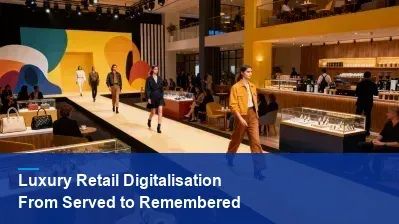
Luxury Retail Digitalisation: From Being Served to Being Remembered
When entering a luxury store, would a customer prefer a polite generic greeting or a welcome that recognises a recent interest and prepares the relevant product? The difference reflects a changing relationship between consumers and luxury brands.
This article interprets the consumer-trends discussion in Deloitte's 2026 Global Powers of Luxury Goods report, as presented in the Chinese source.
Shift one: customers want recognition, not only service
The report figures cited in the source show 57.9% of luxury consumers expecting personalised products and services, rising to 69.5% in China and 80.2% in the UAE. Personalisation increasingly means an offer that fits the individual, rather than a generic premium experience.
The source's example of a French luxury executive describes personalisation beyond initials on a product: an advisor at any store can access relevant browsing, purchase, size and colour preferences.
Why this affects engagement and purchasing
The cited figures also indicate that 56.0% feel more connected when brand content reflects their interests, while 56.3% say personalised advertising influences purchase decisions. The latter figure is reported as 77.2% in the UAE and 67.3% in the US.
How brands are responding
- Connected profiles: combine relevant website, mini-program, store and social-touchpoint information into a consistent customer view.
- Preference modelling: use data and AI to anticipate relevant interests rather than wait for every preference to be stated again.
- CRM in the store: make the useful profile available to the advisor during service.
Personalisation depends on trust
Sharing data can be part of an exchange for better service, but the brand must deliver on that expectation. Recognition should demonstrate understanding. Customer authorisation and the resulting experience together build a relationship that extends beyond the product.
Shift two: experiences compete with possessions
The source cites 8% year-on-year growth in experiential luxury such as travel and hospitality during 2025, reaching €103.4 billion. Its interpretation is that spending is being redistributed towards experiences rather than simply disappearing.
A Paris luxury department-store example describes younger visitors seeking a café and gallery experience before deciding whether to shop. A shareable moment can become part of the reason to visit.
The store becomes a destination
A branded café, an exhibition or a hands-on craft encounter changes the relationship from a single buying occasion into a broader experience. It creates reasons to spend time with the brand even without an immediate transaction.
How brands are responding
- Develop flagships with cafés, exhibitions and artist collaborations.
- Use temporary concept stores to create a distinctive occasion.
- Offer private workshops and masterclasses that let customers experience craftsmanship.
Experience becomes part of the offer
A visit, a photograph or an exhibition may not produce an immediate sale, but can influence later choices, social sharing and understanding of the brand. Treating these activities only as decoration around checkout misses part of their value.
Two shifts towards a deeper relationship
Both developments suggest that consumers want to be recognised, understood and given experiences worth remembering. Brands therefore need customer information, service, content and experiences to work together.
The source's conclusion is that understanding customers and creating memorable encounters can strengthen a relationship that is less easily replaced by another transaction.
Source note: the Chinese article attributes this interpretation to the consumer-trends section of Deloitte's 2026 report, describing research across ten countries and 420 luxury executives, with data from August–September 2025.
Related topics
PEKON's related materials cover Smart Retail, omnichannel CRM, luxury store operations, a luxury retail project spanning over 300 stores, and Tmall Member Connect integration.