
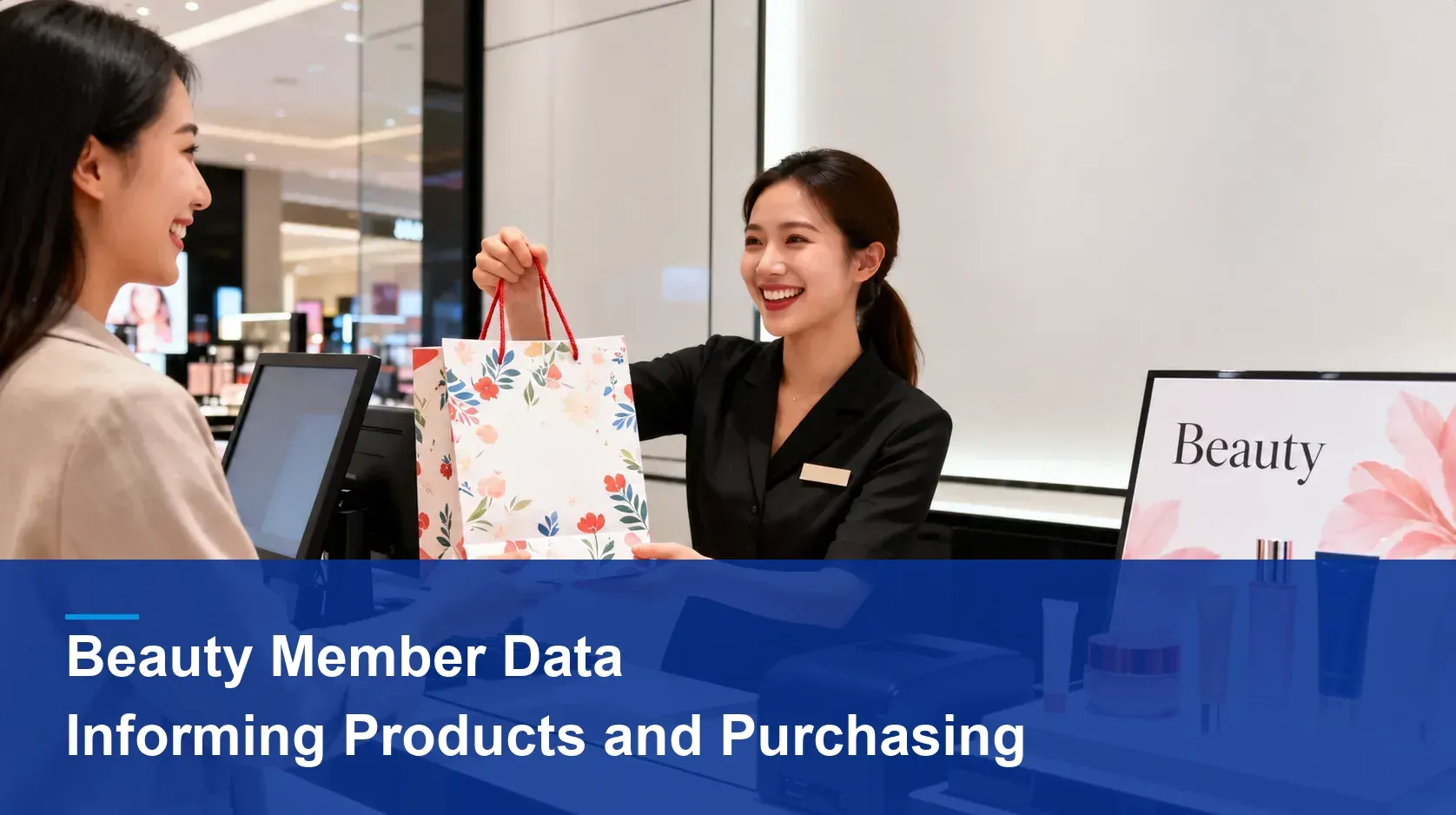
Using Beauty Member Data to Inform Product Development and Purchasing
Beauty retail has traditionally started with products and then looked for buyers. Customer information offers another starting point: understand people before deciding what to buy, allocate or develop.
Member data is useful beyond coupons and campaigns. Transactions, preferences, purchase cycles, browsing and feedback can inform merchandise decisions when they are organised and analysed together.
Which information matters?
Transactions: examine combinations, purchase intervals and responses to prices, gifts and discounts, not only the products bought.
Preferences and characteristics: relevant volunteered information and consultation feedback can cover skin needs, desired effects, ingredients, fragrance, packaging and usage situations.
Behaviour: across mini-programs, stores and private-domain customer engagement, repeated browsing, abandoned baskets, searches and unused coupons can indicate interest that has not become a purchase.
The objective is not to collect as much as possible. It is to retain useful, relevant information connected to product decisions. CRM can provide the shared identity and data foundation.
Turn records into insights
Connect audiences and products. Look beyond sales rankings to understand which members choose a product, what they buy next and which benefits attract valuable customers.
Identify possible gaps. Repeated searches for long-wear foundation among customers with oily-skin preferences, combined with weak conversion or feedback, may warrant investigation. High browsing and low repeat purchase can also indicate an experience or pricing issue.
Assess lasting product performance. Sales volume alone does not distinguish a one-time purchase from a product that valuable customers repeatedly choose. Review repeat purchase, feedback, returns and use cycles together.
Apply the evidence to purchasing and allocation
Regional customer profiles can inform different assortments. Stores with strong demand for hydration and barrier-care products may need a different mix from those serving younger customers interested in makeup and trial products.
Combining member, sales and inventory information helps identify regional differences before identical allocations produce excess in one location and shortages in another. The retail system supplies the merchandise and stock context needed for that analysis.
Support customer-informed product development
Test concepts: invite relevant groups to respond to ingredients, effects, textures, fragrance, packaging and price points before launch.
Follow the initial audience: review conversion, repeat purchase, feedback and use cycles after launch. Strong initial buying with weak repeat may require investigation into experience, expectations or price.
Return results to the next decision: connect demand insight, concept testing and post-launch learning rather than treating them as separate projects.
Make customer understanding part of merchandise work
This approach requires an ongoing process from collection and analysis to business use. PEKON's experience supporting beauty data and loyalty operations highlights the value of connecting those steps so brands can respond to demand and adjust assortments more quickly.
Frequently asked questions
Can a brand start with a small member base?
Yes. Even a few thousand members can support useful comparisons if purchases, basic preferences and purchase cycles are recorded consistently. Begin with a focused question and build quality over time.
Why would members share personal preferences?
Explain the service value, such as more relevant recommendations, and protect the information under appropriate privacy rules. Collection should be purposeful and based on a clear value exchange.