
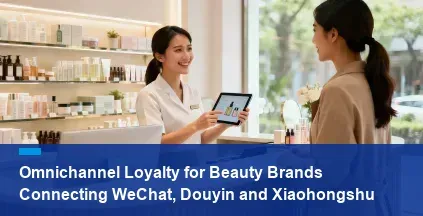
Omnichannel Loyalty for Beauty Brands: Connecting WeChat, Douyin and Xiaohongshu
Beauty customers encounter brands through WeChat, Douyin, Xiaohongshu and physical stores. Each touchpoint can attract traffic, but fragmented identities, benefits, behaviour and orders make private-domain customer engagement difficult. An effective loyalty system connects those records into a customer base the brand can recognise, understand and serve over time.
Omnichannel loyalty is more than operating several social accounts. Customers need a consistent membership framework so the brand can connect discovery, coupon collection, store visits, purchases and repeat purchases.
How can the brand recognise the same customer across platforms?
A shopper may discover a product on Xiaohongshu, collect a coupon in a Douyin livestream, order through a WeChat mini-program and register in store. Without identity matching, the brand sees disconnected events.
Unify member identities. Whether registration begins in a mini-program, official account, Douyin shop, Xiaohongshu campaign or store POS, use available phone numbers, WeChat OpenIDs and membership IDs to identify and merge records where possible.
Maintain shared points and tiers. Purchases, check-ins, coupons, campaigns and store transactions should contribute to the same membership account under the brand's rules. Consistent benefits encourage continued engagement across touchpoints.
PEKON Omnichannel CRM & Loyalty Platform provides a foundation for managing member identities, tags, points, tiers and benefits across connected store and digital touchpoints.
How does shared data support automated engagement?
Consolidating records is the starting point. The operating value comes from using them to communicate through an appropriate channel at a relevant moment.
Trigger activity from behaviour. A member who collects a mini-program coupon but has not redeemed it in store could receive a WeCom reminder. A serum purchase can inform a complementary-product recommendation near the next purchase cycle. Campaign participants who do not return can enter a follow-up journey.
Keep the journey consistent. A coupon obtained through a livestream should be usable in the agreed mini-program or store flow. Coupon status, tiers, orders and benefits need consistent updates so staff can recognise the same entitlements.
Connecting these processes with the PEKON Smart Retail System brings member identification, checkout, campaign redemption and associate service into the store workflow.
How do WeChat, Douyin and Xiaohongshu contribute?
The platforms serve different customer behaviours. A common membership foundation allows the brand to preserve those differences while retaining connected records.
WeChat supports the ongoing relationship
Mini-programs, official accounts and WeCom provide entry points for identity, benefits, redemption, replenishment reminders and associate service. They support lifecycle engagement after the customer joins the brand's membership ecosystem.
Douyin connects content with conversion
Livestreams and short videos can introduce products, promote events and generate immediate purchases. Returning relevant transaction data to the membership framework helps the brand understand subsequent visits and repeat buying.
Xiaohongshu supports discovery and interest
Content often influences shoppers before purchase. Linking subsequent registrations, enquiries, coupon activity and visits to a member account helps assess how that discovery contributes to store and sales outcomes.
How can the brand evaluate channel ROI?
Separate platform dashboards rarely explain which channels attract customers who remain valuable over time. Connected records make journey analysis possible.
Analyse conversion paths. A shopper may discover the brand on Xiaohongshu, search for its official account and buy through a mini-program. Another may collect a Douyin coupon and purchase after a store consultation. These paths show the different roles of discovery, traffic, conversion and repeat purchase.
Build a lifecycle view. A unified member record can connect purchase level, categories, interaction history and touchpoint sources: where the customer first engaged, which stores they visited, what they bought, which campaigns they joined and which benefits remain unused. That information supports more relevant service.
Why is the member centre the foundation for brand-owned customer engagement?
A shared member centre gives the brand a common basis for data and operations. Platform traffic can gradually become identifiable customer relationships, supported by consistent benefits and engagement rules.
This is more than adding shoppers to a group chat or sending the same content to everyone. Identity, behaviour, entitlements and contact rules need to work together so cross-platform activity informs future service and repeat-purchase programmes.
Brands can retain distinct content on each platform while managing customer strategy centrally. PEKON's experience with beauty brands highlights reliable integration and shared business capabilities as important foundations for sustaining this approach.
Frequently asked questions
Does operating several platforms place a heavy burden on systems and teams?
It can, which is why shared identity, synchronisation, benefit rules and automated engagement matter. Content teams can focus on each channel while membership strategy and analysis use a common operating framework, reducing repeated work across separate dashboards.
Will unified operations remove each platform's personality?
No. The shared elements are customer data, benefits and strategy rules, not identical content. Better-connected records can reveal different audience preferences and support more appropriate campaigns on WeChat, Douyin and Xiaohongshu.