
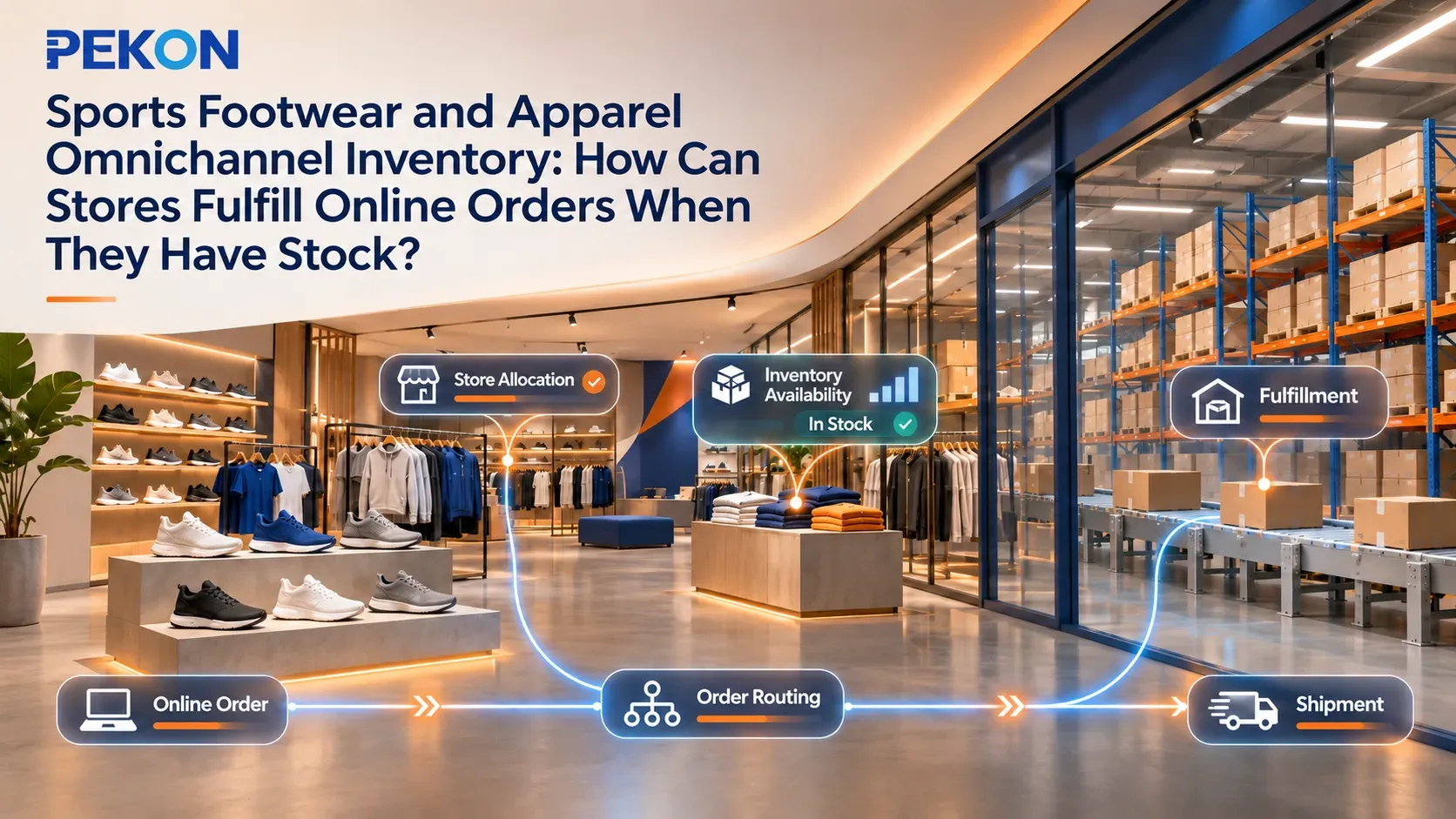
Sports Footwear and Apparel Omnichannel Inventory: How Can Stores Fulfill Online Orders When They Have Stock?
When popular sizes are out of stock in the e-commerce warehouse while some stores still have available inventory, sports footwear and apparel brands can use store inventory to fulfill online orders. To make this work, the brand needs to connect product mapping, inventory reservation, order allocation and fulfillment feedback, while also assigning store employees to pick and ship the products.
Standardize Product, Color and Size Mappings
The style, color and size shown in an online order must accurately correspond to the SKU used by the store. If a product also requires separate management for last type, fit or version, these specifications should be included in the mapping rules.
ERP, POS and e-commerce platforms may retain their own product codes and identify the same specification through mapping. If the e-commerce platform uses a different size-labeling method, the store should still be able to locate the correct product after the order is transmitted and deduct the correct inventory. Product mappings should also be maintained whenever new products or specifications are introduced.
Channel-specific prices and promotions can be configured separately. When the store ships the original online order, the transaction amount and discount information should be retained. Refunds should then be processed according to the original transaction and applicable rules.
Determine Store Inventory Available for Online Fulfillment
The quantity made available online should be determined by the store’s actual saleable inventory, inventory already reserved for orders and the quantity that must be retained for in-store sales.
| Inventory condition | Recommended treatment |
|---|---|
| Saleable and able to ship on time | Make the confirmed quantity available online |
| Already reserved for an order or customer pickup | Exclude it from other online orders |
| Pending inspection, pending receiving or not saleable | Exclude it from the available quantity |
| Low stock in popular sizes | Set a store-retention quantity based on local sales needs |
Stores participating in online fulfillment need reliable inventory records and suitable shipping conditions. If a store frequently runs out of specific sizes, the brand should review online order volume and local supply requirements before adjusting the quantity made available or changing replenishment arrangements.
For related information, see Sports Footwear and Apparel Inventory Management.
Clarify the Responsibilities of the Order Platform and Store System
The brand’s order platform and store retail system exchange orders, inventory data and fulfillment results through interfaces. Before implementation, the project should clarify the following responsibilities:
| Business process | Responsibilities to define |
|---|---|
| Inventory availability | Which system calculates and provides the available quantity, and when the quantity is updated |
| Order allocation | Which system selects the fulfillment store and who is responsible for accepting the order |
| Inventory reservation | Which system records the reservation and how it is coordinated with store sales |
| Picking and shipping | How the store verifies the SKU, confirms the outbound movement and returns the fulfillment result |
| Cancellation and exceptions | Who releases the reservation and who handles orders that cannot be fulfilled |
When the last pair of the same style and size is needed for both an in-store sale and an online order, the systems must coordinate reservation and deduction to avoid making two commitments for the same product. Inventory should be deducted only once after shipment. When an order is canceled, the reservation should be released according to the actual processing result.
If inventory feedback is delayed or a store cannot fulfill the order, the assigned team should process the accepted order and adjust the store’s available order range according to the system rules.
PEKON Retail System and Order-Platform Integration
PEKON has worked with OMS platforms and brand order centers on omnichannel fulfillment projects, integrating store-side operations and related interfaces with the brand’s existing architecture.
PEKON Smart Retail System supports multi-variant SKUs, product specification codes and barcode management. It can maintain retail price lists by SKU, applicable retail unit and effective date, while recording POS sales, returns, exchanges and store inventory changes.
During implementation, the responsibilities for product synchronization, order allocation, inventory reservation and fulfillment feedback are determined according to the capabilities of the order platform, interface conditions and store operating procedures. Normal shipment, cancellation and exception scenarios should then be tested across systems.
For store-based online fulfillment, see the PEKON Sports Footwear and Apparel Retail Solution, or contact PEKON for a solution discussion.